-
Time to Decipher Trees
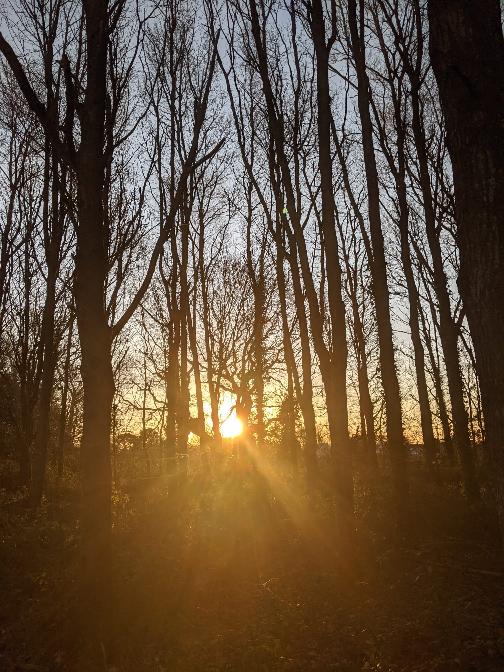
I’ve been obsessed with time lately. It sits watching me on the sofa in the languid heat of late summer and I wonder if it’s a friend or foe. Some people, especially the very elderly, eke out their time. They ration what is left, a bit today, a bit tomorrow, can’t waste what remains.
When you’re a child, you don’t even think about it. You’re buoyed along by it. It runs alongside you, plays endlessly with you. You can waste as much as you like. There’s always more. Then, as adults, it begins to knock bits off, to wear away the layers of your hard earned ego, to remind you that it’s just a loan. It is omnipresent, not you. It owns you. You do not have it at your disposal.
So, to answer that forever guilt provoking question: am I wasting time? I have decided to befriend time and wallow in its generosity before it finally engulfs me.
Because when I am not doing, I have more time to daydream, to wonder about the language of trees and wish I could decipher what they whisper to each other. I have more time to observe the people around me and try to understand what moves them, to forgive their follies and my own.
I have more time to stare at beautiful pictures, re-read poems and novels and still be moved by them, and know that art bypasses time.
I have more time to wonder what we are all doing here anyway and almost take pleasure in that mystery; more time to accept that I will not decipher the language of trees.
And to finish, here’s a little poem to thank the time travellers who have accompanied and are still with me on this journey:
Before I Forget
Before I forget to look at the blinding orange sun
Spreading its liquid halo behind the hills at dusk,
Crepuscular, alien, astonishing, belittling,
Beyond beautiful, beyond understanding,
Before I forget to look at the black cat
Slinking his way amongst the bushes,
the fledglings skimming low at dawn,
Before I walk away forever, I will remember this:
That this beauty, that this pain existed,
That this flimsy flesh, this broken loveliness
Was here on earth where I walked my time.
I will remember to look at the faces of friends,
Of my people, mi gente.
I will engrave the sweetness of one, the irony of another,
The anguished eyes of some, the helpless gentleness of others,
The hidden disappointment of most.
And I’ll take with me the diamond of your generous hearts,
Which maybe I didn’t deserve, but you gave me anyway.
Will it all fade, as light as gossamer, like the bougainvillea leaves
That fall paper thin, dried crumbling exuberance?
Will none of this matter when I no longer remember,
Or will it live on, strands threading through the universe,
Forever weaving and dancing in love and sorrow?
-
Roots? 21st July
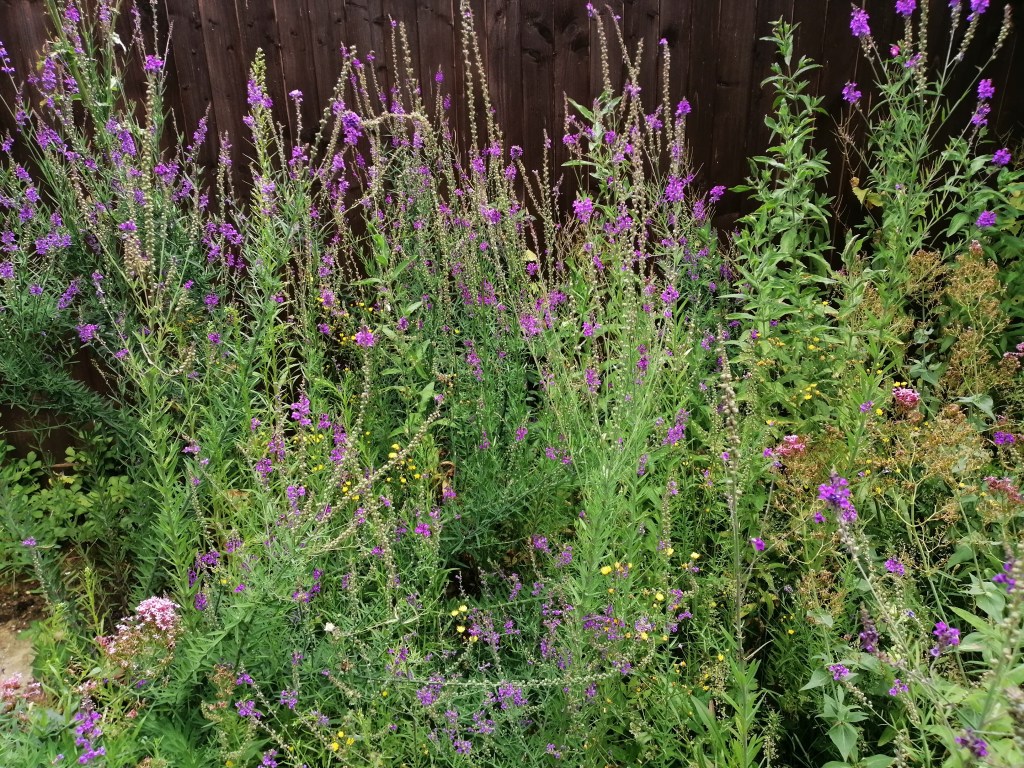
I am just back from England, where I spent the first nineteen years of my life, so supposedly my roots are there. I say supposedly because with each passing year that I spend a dutiful two weeks in the UK, I have a greater desire to return to this Mediterranean island, despite the heat, mosquitoes and hordes of sweaty tourists.
I am abandoning the romantic notion of home. The literal sense of home died with the death of my mother in her Sussex haven seven years ago. Of course those withered roots still make their presence felt when I dream I am flying over the Seven Sisters cliffs at Seaford or wandering over the Devonshire hills. Memory and the subconscious like to dig up bits of nostalgia every now and then, especially when they know how unlikely it is that you get to revisit those landmarks of your childhood. And even if you do, memory has painted an idealised picture which the new reality fails miserably to live up to. Or, even worse, there is a housing estate on your treasured fields.
I was grafted onto a foreign tree over 50 years ago and even though that re-rooting was debilitating and painful for a while, now those roots have grown deep and sturdy in what was an alien soil. They need the salt infiltrated water, the light, the harsh summer sun and mild winters to survive. They also need the people, the friends, the language, the colour, the food, the cicadas, the smell of pine resin, the guardian mountains.
Most of all they are nurtured by those friends: Spanish, English, Mallorcan, Irish, Welsh, Jamaican, Norwegian, South African, German….. Where else but here, in this crucible of nationalities and cultures, where tolerance is the key word, would I want to live for however many years this old tree can keep standing?
In a sense, Mallorca is an example of how the uprooted, asylum seekers or not, wanderers and adventurers, can live together in relative harmony. Increasing migration and immigration is unavoidable, so perhaps we should take note of the enriching coexistence of the inhabitants of this singular archipelago, the Balearic Islands.
-
Summertime
There is a saying in Mallorca that goes: ‘A s’estiu tothom viu’, which literally means, ‘everyone lives in the summer’. So in theory, living is easier, even if you are homeless, are ill, are jobless, or can’t stand your partner or boss. We are all included in the blossoming of summer.
Let’s consider the positive aspects of summer. If you are homeless, you won’t die of the cold and can sleep on the soft sand of a nearby beach. If you are ill, symptoms and pain often lessen as the body slows down under the implacable heat. And the same goes for worrying about your lack of work or putting up with your partner or boss, if you have one. Your brain is also lethargic and drowsy so it has no energy for stress or arguments. You drift along, weighted by the plenitude of the Mallorcan summer, thinking you have at last achieved some Zen detachment from the burdens of life. Days are long, there’s time for everything, above all for contemplating your navel. Autumn and winter are so far away.
On the downside, mosquitoes are relentless, as is the screech of traffic in the city. Noise invades all. Drunk young tourists throw themselves off hotel balconies in the resorts or leave you no room on the beach. The harsh sun is a spotlight on all defects, human and otherwise. Frayed nervous systems finally unravel at 35 degrees, so more shouting goes on in apartments in the early hours of the morning in June, July and August than during the rest of the year. We aren’t all drugged by somnolency. And then there is the exposing of our body. Many of us, especially women, wish we hadn’t fed it so well during the winter months and regret not having dragged it to the gym. Too late. You either flaunt it next to the slyph-like beauties on the beach and pretend not to give a damn or you cover your batwings and sit in the shade.
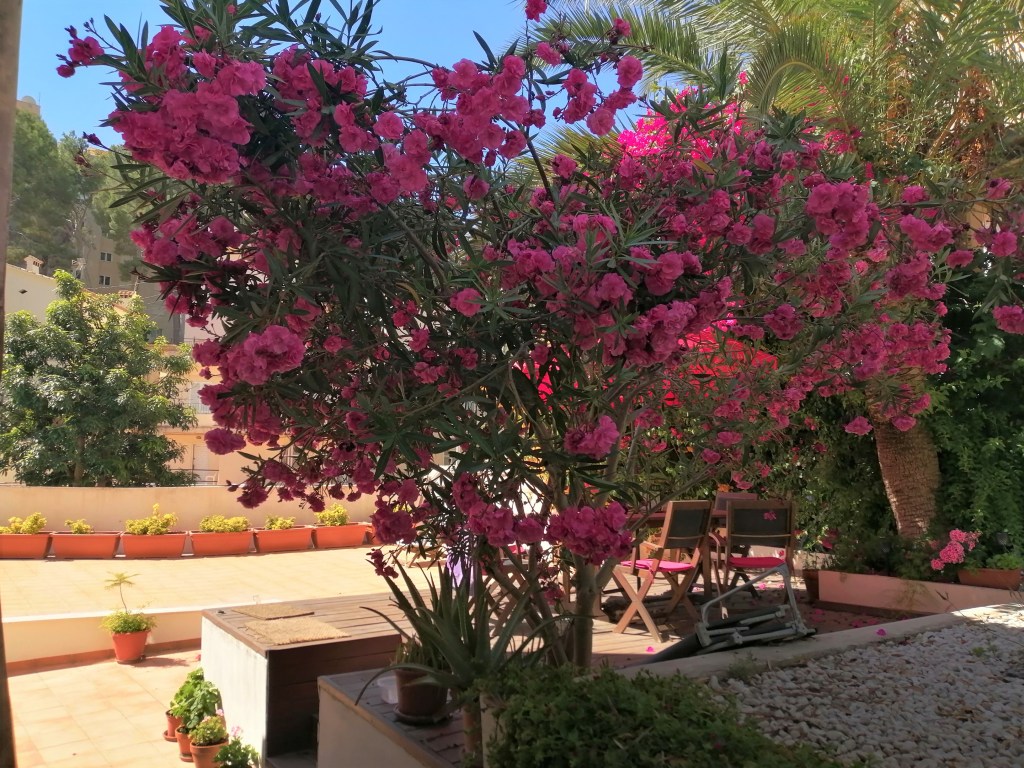
But there are the mountain villages and the bougainvillea flaunting their colours over white walls, and the terraced slopes where the silver backed leaves of the olive trees glint in the sun.The hard blue sky becomes dark velvet in the evening and is reflected in the lolloping waves of the Mallorcan sea. Parts of paradise still remain on this island. I feel privileged to live here and anxious about the preservation of this vulnerable paradise. But as the song goes in the George Gershwin musical, Porgy and Bess, ‘summertime and the living is easy…’
- January 2026
- April 2025
- November 2024
- April 2024
- January 2024
- August 2023
- April 2023
- February 2023
- November 2022
- September 2022
- July 2022
- June 2022
-
Julie, Patricia
Blog 16th June
Julie, Patricia
I don’t want to be morbid or pessimistic but in the last eight months two friends have died and it’s beginning to hit me with increasingly harsher slaps that our time here on this beautiful, troubled planet runs out far too quickly, usually when we are just getting an inkling of what it’s all about. If we are lucky enough to reach our eighties or nineties, the last five or ten years gather a terrifying speed as if the world can’t wait to kick us into another dimension.
But that was not the case of Julie who died at the age of 58 with her brain still bubbling over with all the plans and projects she was going to carry out at a reasonably leisurely pace. Julie was angry at dying, at the cancer that consumed her body in eight months, but until the very end she tried to believe she would overcome it. Julie was a psychologist and mindfulness teacher. Her weekly mindfulness class, which I attended, was followed by my Spanish class in her Learning Centre. She was one of the first students to do the Spanish course Learn Spanish Without Really Trying created by Cecilie Gamst Berg and edited and taught by me. The book is of course dedicated to Julie.
I only knew Julie for just over a year, but in that year she became a true friend. Her integrity, empathy, intelligence and enthusiasm were a gift. She couldn’t have imagined how much her fleeting presence in my life helped me to overcome doubts, laziness and insecurities. She offered to become my ‘accountability buddy’, which meant I was obliged to finish a chapter of the book I was writing (Letters to Mallorca) by a certain date so she could read it. In those classes we laughed a lot, and everything seemed easier and lighter. Till illness really took hold. Then her mindfulness techniques were used to keep despair at bay. She knew what was important and what was not worth wasting energy on. She knew the importance of being kind, of love, of helping one another.
Patricia died in March at the age of ninety-one. In the nearly four years that I knew her, she became a kind of spiritual mentor. This sounds very lofty, but Patricia had her feet well on the ground of her home in Binissalem. I would visit her every Monday there. After she had read the Murli, a sacred text, we would talk, have tea and biscuits and inspect her garden. Those Mondays with Patricia set me up for the week. It wasn’t only the advice she gave or her very interesting conversation. Patricia had presence. You felt good just being in the lightness of that presence. Her face had a luminosity I’ve seen in very few people. She got up at four am every day to meditate, was a strict vegetarian and followed the principles of Raj Yoga which she had taught many years. She had many things in common with Julie: honesty, kindness, a generous heart, intelligence and a great sense of humour. Whenever I was annoyed with someone, she would always say: ‘Send them good wishes’. That sentence will stay with me till I die. She encouraged me to keep writing, to not dither and waste time, to use the gifts we are blessed with. Since Patricia died, I sometimes feel disorientated. There is a loneliness when beloved people die. Who can fill that gap? When I slouch on my sofa wondering what to do with my life, I can hear her gentle voice telling me that time is running out, not to waste what is left.
I feel privileged and honoured to have known them both.
For Julie and Patricia is the following poem which comes from my book Poems of Joy and Melancholy.
NAKED
No more stories
No fancy theories
No social traps
Nor false gurus.
Just let go
Of what’s not me
And what’s not you.
Divine sculptor
Carve out pride
Tap away fear,
So all that’s left
Is pure naked me
Mirroring you,
A triple flame
Burning to ashes
Hard earned fiction,
So all that’s left is
Love.
Let go of chatter
And elusive silence
May stay a while.
Blow away illusions
With your gentle breath,
So I may play
Light as a child.
Open my tired eyes softly
To see heaven creep in
And crumble the stones
Of ancient walls
Where wild roses
Push through the cracks.

Heather Smith
Published work.
-
Time to Decipher Trees
-
Roots? 21st July
-
Summertime
-
Julie, Patricia

