-
Antonia
Sometime this year I will be publishing a book of short stories about five types of women. They are fictional except for the first one which is based on an elderly woman who I met in Barcelona some years ago. She died about ten years ago.
Antonia was extremely poor. It was the kind of poverty where the few things she owned had all been given to her. She would sing on the streets of Barcelona to earn a few coins and for a year she was homeless until a benefactor found a thirty square metre apartment for her to live in. My son used to listen to her sing and befriended her. She changed his life.
Antonia had a quality about her which attracted people. Some would come and ask her advice about their problems; even people high up in the business and political spheres would lap up her wisdom. But she would only accept coins for her singing. She was the most generous person because she gave of her time and listened with her heart.
In these times of strutting egos, greedy bullies and empty imagery, I am grateful that she existed, grateful for her pure heart and authenticity. Sometimes the true heroes and heroines of this world are to be found singing at the entrance to the underground in big cities.
When I first met her through my son, she insisted I come to lunch. The following poem is to honour that day and her memory.
ANTONIA, THE SAGE
In memory of Antonia Mantas
You offered me
Your one un-chipped cup,
You spent your last cents
(A mean offering
From guilty passers-by)
On skinny chicken wings
To invite me
To your feast,
As if I was
A queen,
An honoured guest,
Undeserving of your reverence.
But it was you
The queen,
With your delicate smile,
Gleaning words of hope
From your mourning heart.
Now you are gone
And the world has a hole,
Like the whole of Greenland
And the pavement where you sat
And sang to us
And cheered us
And advised us
Is sacred ground.
Yes, sacrosanct,
You, trespassers,
Who dare to tread
On holy cement
And not be burnt
To smouldering embers.
-
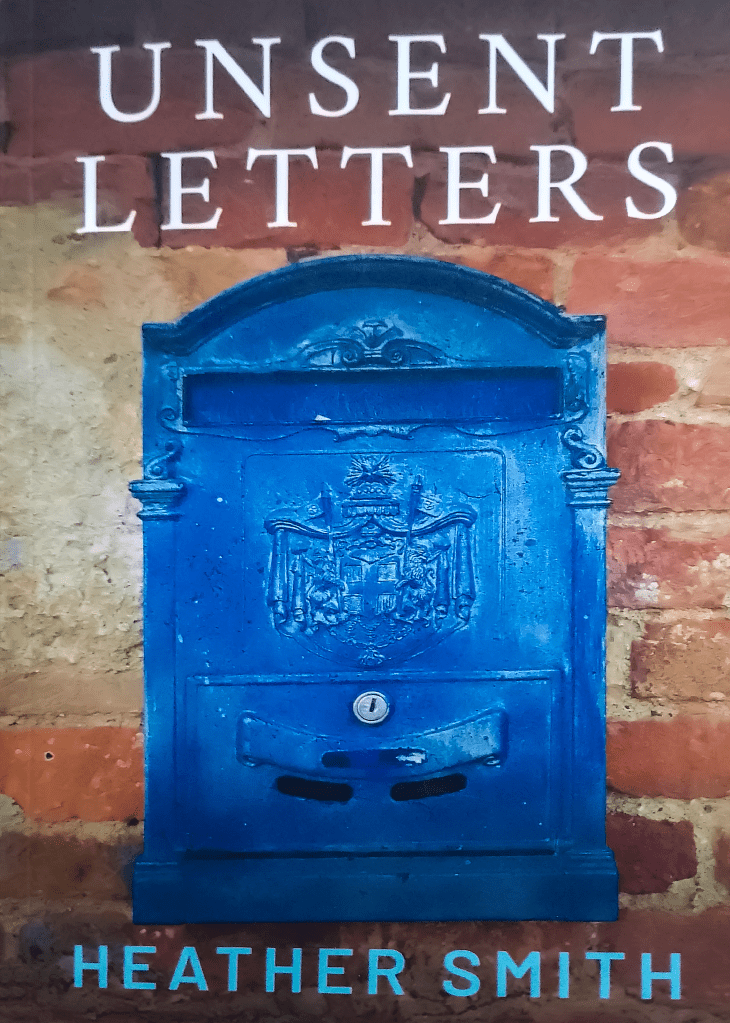
Unsent Letters
My fictionalised memoir has now been published. It is available on Amazon and Waterstone’s catalogue.
The biggest secret is your mind.
Open it.
On her seventieth birthday, Elspeth announces that she is taking time off to travel by herself to Spain, Italy, England and Ireland, all places which have a special significance to her.
What she doesn’t tell them is that she has been diagnosed with a terminal illness.
During her travels she writes a letter to each one of her family and friends in which she opens her heart and describes how they have influenced her life.
All Elspeth’s letters are penned against the backdrop of the social and political changes that occurred during a half century of living on the island of Mallorca, and her initial struggle to adapt to a foreign culture after her marriage to a Mallorcan.
These are Elspeth’s last days and these are the unsent letters she must now send.This is a reflection on the joys and difficulties of living on the Island of Mallorca for over 50 years. It is also a witness to the changing role of women in Spanish society and to the huge political and social changes that have taken place over the last decades. Above all, it is a letter of gratitude to love, friendship and family.
I will be at the Indie Book Fair in Huntingdon, Cambridgeshire on Sunday 4th May from 10am to 4pm. I will have a stand presenting both The Last Months of Violet Koski and Unsent Letters. So if anyone is in the area and interested, it would be great to meet you!
-
Who and what do we write for?
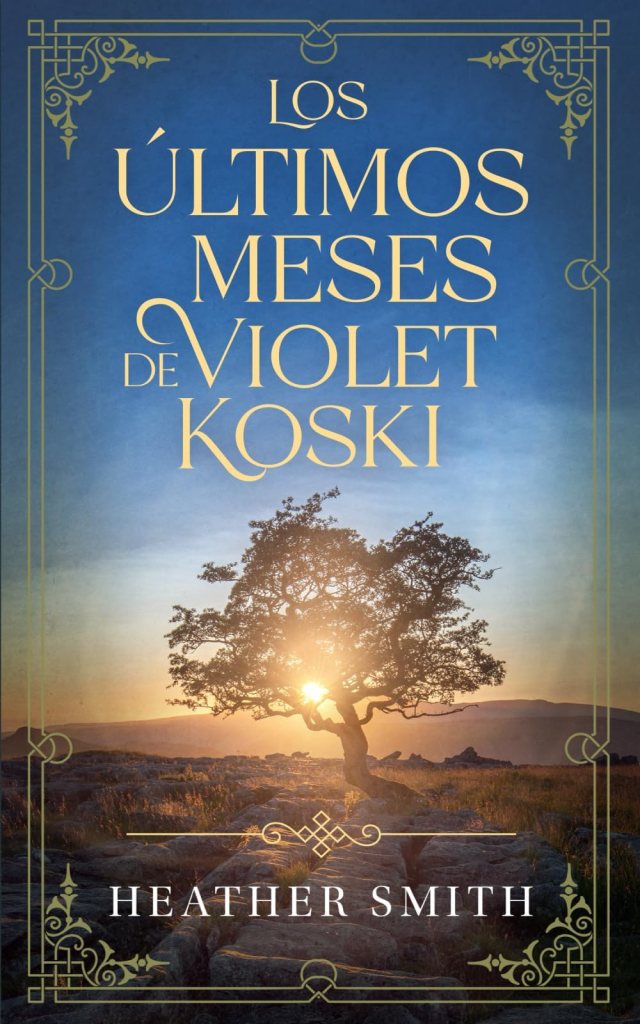
I recently translated into Spanish my novella The Last Months of Violet Koski. Both versions in English and Spanish are available on Amazon. This translation was done on the request of some of my Spanish friends who couldn’t read the English version and I am happy that a few copies have reached them. I am fully aware that not many other people will read it.
This brings me to the question: who and what do we write for? In this age of aggressive marketing and AI there is little to be done to get your work known, unless you are willing to go down the tortuous road of online advertising, adopting tricks of AI on the way. At this stage of my life I don’t have the skill, will or energy to embark on this journey without (paid for) help, although I admire all the younger and not so young authors who do.
Obviously using AI has huge benefits in so many areas, but in the world of literature (and art) I have serious doubts. Reading a book allows you to enter another person’s mind. Their soul is inprinted in every page. This is the magic of the written word which can speak to you from maybe centuries ago and still move you profoundly. Unadulterated literature translates the author’s feelings, thoughts and spirit into an art form whose voice remains true throughout time. What then can an AI produced piece of writing give us? Just a souless, possibly perfect form that is dead at its core.
As I am unable to float in this tidal wave of new technology, I have finally not succumbed to the wish to give up, although I have been seriously tempted, and have decided that I will simply enjoy my little creative process when I feel the need to write and not stress about how effectively the final product is launched. If in the end what I write touches a few, then I am satisfied. If I have communicated ideas and emotions to even one person, then the magic has happened.
In 2025 I will be publishing a fictionalised memoir which reflects on my fifty years in Mallorca through a therapeutic and old-fashioned form: letters. I hope it will reach some of you. hsmith552001@yahoo.es
-
The Last Months of Violet Koski
I am happy to announce that my novella The Last Months of Violet Koski has now been published and is available on Amazon.

-
Solidarity
I was ill with Covid recently and was fortunate enough to have my son staying with me. As I live by myself, it would have been difficult to manage without his help during the time I was ill. How vulnerable and fragile we are, even though we often don’t like to admit it.
This made me think of our need for the solidarity of others when we are ill, infirm, sad, lonely or extremely ancient. On a personal level most of us are lucky enough to be able to count on someone to help us, at least momentarily, in our need. The majority of human beings seem to be able to feel solidarity for others on a personal level. Solidarity means putting yourself in the place of others. It means acknowledging their needs and trying to do something to alleviate their suffering or dire circumstances.
But what happens to this solidarity for the victims of war? Then the solidarity of some becomes blinkered. Let us take the example of the Hamas-Israeli war. How can some people only feel compassion for and solidarity with the suffering victims of the side they ‘support’? The systematic destruction of civilians, the majority of whom are women and children can surely have no condoning, whatever the political situation. There can be no one-sided solidarity, no turning of a blind eye to the extreme suffering of the vistims ‘on the other side’. There can be no excusing of any means that justify the end. There can be no going to churches praying for the triumph of the aggressors on whatever side you think deserves ‘to win’. What hypocrisy!.
When I think of the civilians in Gaza often deprived of basis needs like water,electricity, medical assistance, many on the point of starvation and many just preferring to die, who have no one to comfort them in their extreme necessity, then my heart shrinks in horror and sadness. How easy it is for some in their comfortable homes to pontificate about the rights of some, the lack of rights of others, how war is necessary for self defense,etc,etc. Let them spend just one day in the rubble of bombed homes, watching whole families die. Would they not feel just a twinge of compassion? The same compassion felt for those killed by Hamas and their hostages? And here we mustn’t forget the different scale of destruction and death.
If that compassion and solidarity cannot be felt, then we are no better than our cavemen ancestors and our reptilian brains predominate. If it wasn’t for the support and help I have received from kind family and friends now and over the years, I would be tempted to curl up into a ball and wait for it all to be over.
My gratitude to the peacemakers and the truly compassionate of this world. They are the courageous ones, the truly strong ones who can rightly be called evolved human beings. Isn’t it time the rest caught up?
-
Ghosting
I came across the relatively new word ‘ghosting’ a few months ago when a friend asked me if I had been ghosted. The question arose because I had told her about a so-called ex-relative/ friend who suddenly gave me the cold shoulder and didn’t answer any of my messages. When I looked up the definition, it seemed that I surely had been ‘ghosted’. The definition explains that one of the parts of a friendship acts like a ghost: they disappear without warning or giving any explanation, truncating any possibility of having a conversation. Is this due to cowardice, malice, fear of confrontation, or was that friendship just a farse, however many years it appeared to have existed? Or perhaps you are just no longer ‘useful’ to that person. If it is because of a misunderstanding, usually unknown to the ghosted partner, then there’s nothing like a good air-clearing argument or simple clarification which a true friend would anxiously be waiting for.
But going back to the term ‘ghosting’, I really have to disagree with the use of the root word ‘ghost’. Because ghosts don’t disappear; they come back and haunt you. They definitely want their presence to be felt. They usually want to give a message they weren’t able to transmit in their lifetime. They don’t represent absence but an ethereal presence that has slipped through the veils of the other world. What has that to do with someone who has turned their physical back on you? The unanswered WhatsApp is at first felt like an unghostly stab in the back which gradually progresses from consternation and hurt to a deep understanding of the hypocrisy of that ‘friendship’. The wound was painful but it heals over and no hearts have been broken. Real ghosts continue to show themselves to those who can see them; ghosters disappear and make room for authentic human beings to appear in your life. So maybe in the end we should be grateful to them and wish them well on their new ghosting paths.
Here is a poem from my book Poems of Joy and Melancholy (available on Amazon).
NAKED
No more stories No fancy theories No social traps Nor false gurus Just let go Of what’s not me And what’s not you. Divine sculptor Carve out pride Tap away fear, So all that’s left Is pure naked me Mirroring you, A triple flame Burning to ashes Hard earned fiction, So all that’s left is Love.
Let go of chatter And elusive silence May stay a while. Blow away illusions With your gentle breath, So I may play Light as a child. Open my tired eyes softly To see heaven creep in And crumble the stones Of ancient walls Where wild roses Push through the cracks.
-
Early Spring in England
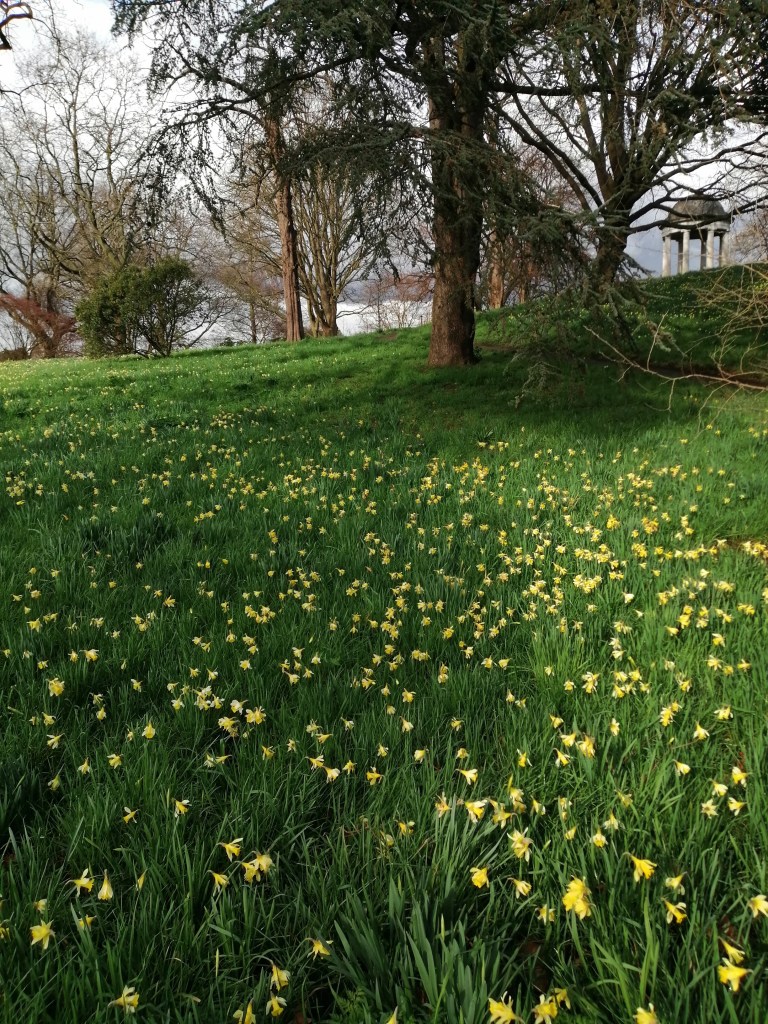
This year the arrival of spring caught me in England. It’s been many years since I experienced the spring equinox in the country of my birth and I enjoyed that shove into the cold stimulating air with undeniable masoquism.
Early spring is stark in the UK. There are plenty of daffodils, the last snowdrops, a few burgeoning primroses and a faint green hue on some trees. The sharp air awakens you with an icy slap when you venture outdoors. Winter is just one step back. It’s nothing like the warm spring of Mallorca and southern Spain where even in March the fields are covered in yellow vinagrilla and the fragrance of orange blossom is already relaxing your senses with a foretaste of summer. Spring is easy here, but instead of drifting along in the soft Mediterranean climate, sometimes the whip of a northern climate is something to be grateful for.
There is nothing sensuous about early spring in England. It hurts, like putting numbed fingers into a bowl of warm water. It’s a time for painful growth, for pushing tender shoots through rock hard earth under the cruel stimulants of sun and rain. Is there no beauty without suffering?
It’s also a wake up call to face what bothers or worries us, to what we have hidden under our warm winter blankets. The unsolved problem, the irksome relationship, the unfinished project, the unfulfilled dream suddenly sit up and stare you impudently in the face, showing you all their and your cracks and flaws in the spring light. Blood begins to flow more quickly, opening the way through lethargic veins like the sap rising through new leaves.
The English spring in its cold indifferent beauty reminds me of how we should stir up our lives, speak our truth, renew, let go of the past because we, too, are only here in passing and, how many springs have we left?
No one wrote more truthfully about spring than T. S Eliot in The Waste Land:
April is the cruelest month breeding,
Lilacs out of the dead land, mixing
Memory and desire, stirring
Dull roots with spring rain.
Winter kept us warm, covering
Earth in forgetful snow, feeding
A little life with dried tubers.
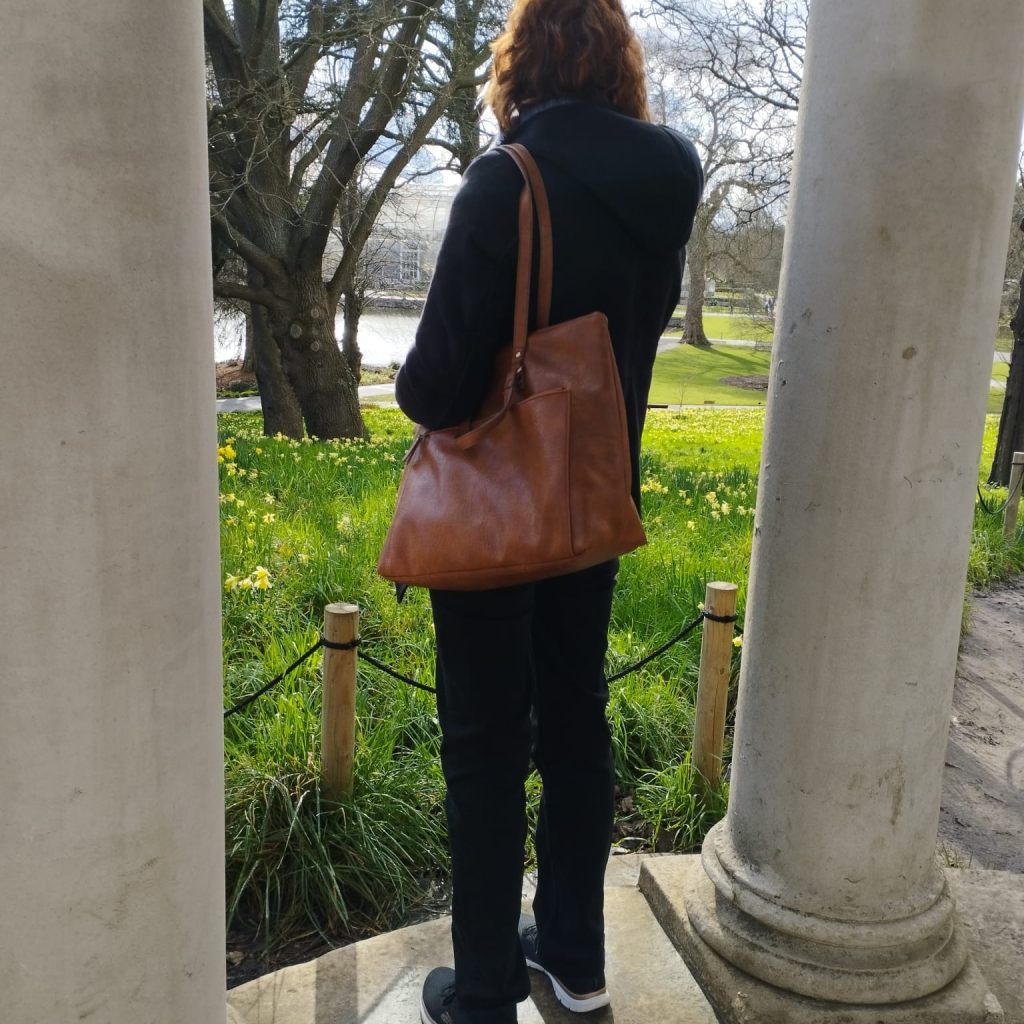
Now that I am back in the warm blossoming south, I intend to spend more early springs in England. I have realised how much I need that mighty push out of my comfort zone on this beautiful but sleepy island.
-
Nothing to Do
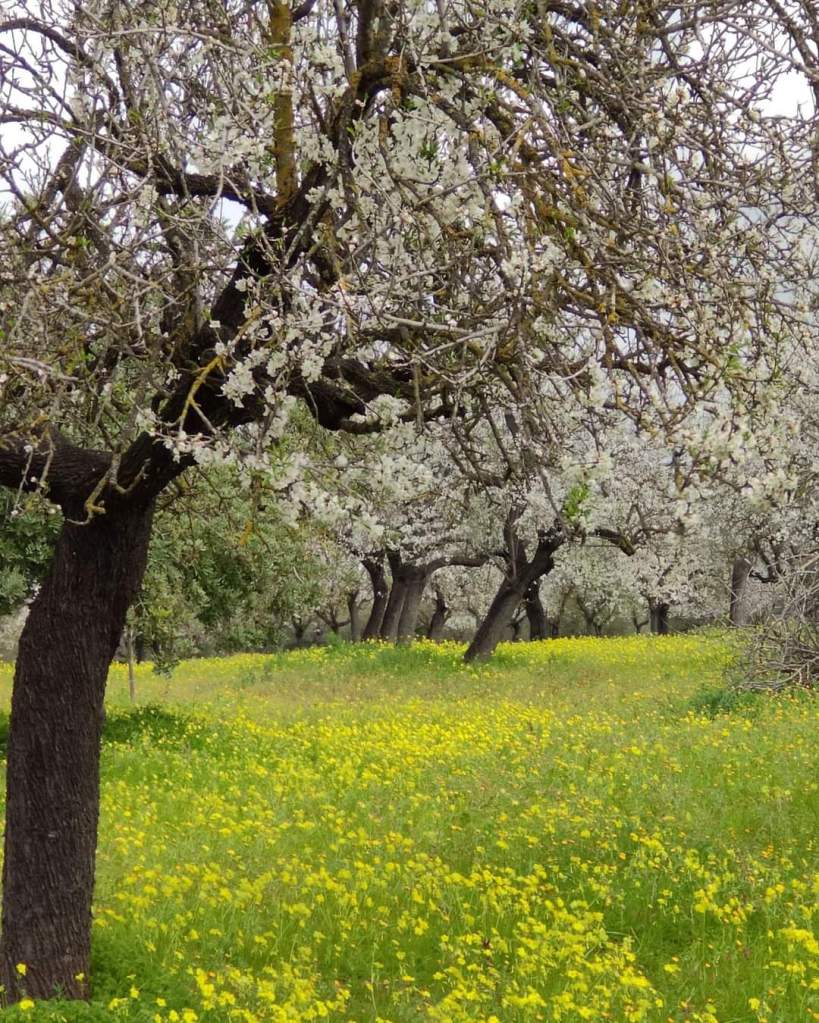
Sometimes I quite desperately want to have nothing to do. I want time to be a little bored, time to watch the slow blossoming of the almond trees, time to quieten this hungry mind that thinks it needs to devour everything it is offered.
Most of us are so busy, so saturated by information that we even think we are living more intensely if we have a full agenda. We must do the workshops, the self-help course, see the film everyone is talking about, go to social gatherings in case we miss out on something and lag behind, not forgetting the energy and care we pour into our work and families if we have them. All this is fine in the right measure even though it might be addictive armour to ward off the wolf of loneliness, but not when there is no time to listen to the humming silence beneath all these rapid comings and goings and visionings. Because that silence is the only thing that lasts and the only way to reach it is by mental detoxing.
Now having nothing to do has become a luxury. Long gone are the days when as a child I would look at the patterns drawn on the walls from the sunlight and invent stories about them. From ‘boredom’ there arise ideas and intuitions which are normally left dormant under ‘busyness’, as do aspects of ourselves that we have pushed under the bed to make room for the onslaught of new input, new information which just dances on the surface of our minds. And what of children nowadays? They are sadly never bored.
And from saturation comes exhaustion. Just to unwind takes an enormous effort because there are so many layers to peel off. How far away from ourselves have we travelled when we need to do courses to reconnect to our true selves. Should we even need to think about it? Should we even need to be reminded how to go about it?
Here is a poem I wrote time ago. It is from my book Poems of Joy and Melancholy.
Nothing to Do
I’m free today No debts to pay No meals to make. Just feeling the blood Run in my veins, Hearing that bird Heralding spring Like every year And watching the sun Spangle the leaves Of the sighing sycamore.
I’m content today In my old dressing gown, My hair on end, No need for preening. Just happy to listen To the blood coursing, The silence growing, Opening the warm lotus Of the heart. The privilege of being On this still Sunday morn With only the birds trilling In a gentle breeze While the universe Enfolds us and rolls us In its circular dance.
-
Menorca
Menorca and Memory
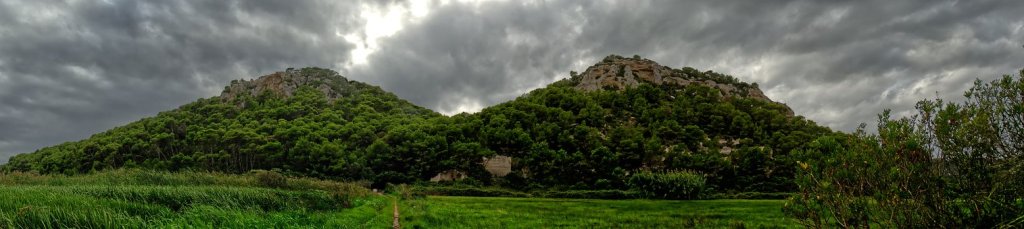
I recently spent a weekend in Menorca. It’s cleaner, greener, quieter and less invaded by tourists and cement than Mallorca. The scenery is less spectacular, less breathtaking than that of Mallorca. There are no mountains, just little hills covered in pine, welcoming mounds dotted all over the countryside. But it was those montículos and the red earth breaking through now and then in the fields that opened a door in the corridors of my memory. As we drove along in the rented Clio, I was suddenly back in the Devon of my childhood, to the ondulating landscape and russet earth of that corner of the west of England, which has nothing to do with Menorca. But there I was. For a moment I was a 9 year old rosy-cheeked girl striding through the lush grass in my wellies without a care in the world.
Memory is selective and likes to play tricks on us. They say we only remember clearly very important or significant events in our lives, that our other routine days are crammed together in an undefined lump. We can’t remember in detail what happened to us last week unless we consciously make an effort at the time. What a waste of precious days and years! Memory is the glue that holds our life stories together. What are we without it?
My mother used to keep a ‘home’ diary and write down every evening what she had done during the day, but only the most boring and inane things, like what she had cooked for dinner or if she had washed her hair. There was nothing about how she felt, how irritated, upset, happy or excited she had been that day, or what had caused it. Although maybe that was a safety precaution against prying eyes, because her diaries were open to the public. But it was a start, a way of recording her uneventful life that ended up in dusty stacks of little diaries in a cupboard that nobody bothered to read after a while because they were so dull. Even so, it reminded her of her existence every day. She obviously kept her secret diary in her heart.
So after the unexpected gift of memory on Menorca, I am thinking I should transcribe in some form or other what I do, feel and think every day and put it in some kind of order. It not only gives me an inkling of who I am when I am honest with myself, but also it will tell those I leave behind more about who I was and what I did while I was on this planet in this human form. That is if they are interested, of course. There’s a strange beauty to be found in recollection, even of ugly or sad moments, because somehow we shape the chaos of images, emotions and thoughts into a meaningful form.
I’m thankful to the nudge memory gave me on that lovely island, for the vivid flashback to my childhood. I’ll try to write it down from now on.
-
In Praise of Cats
Thomas
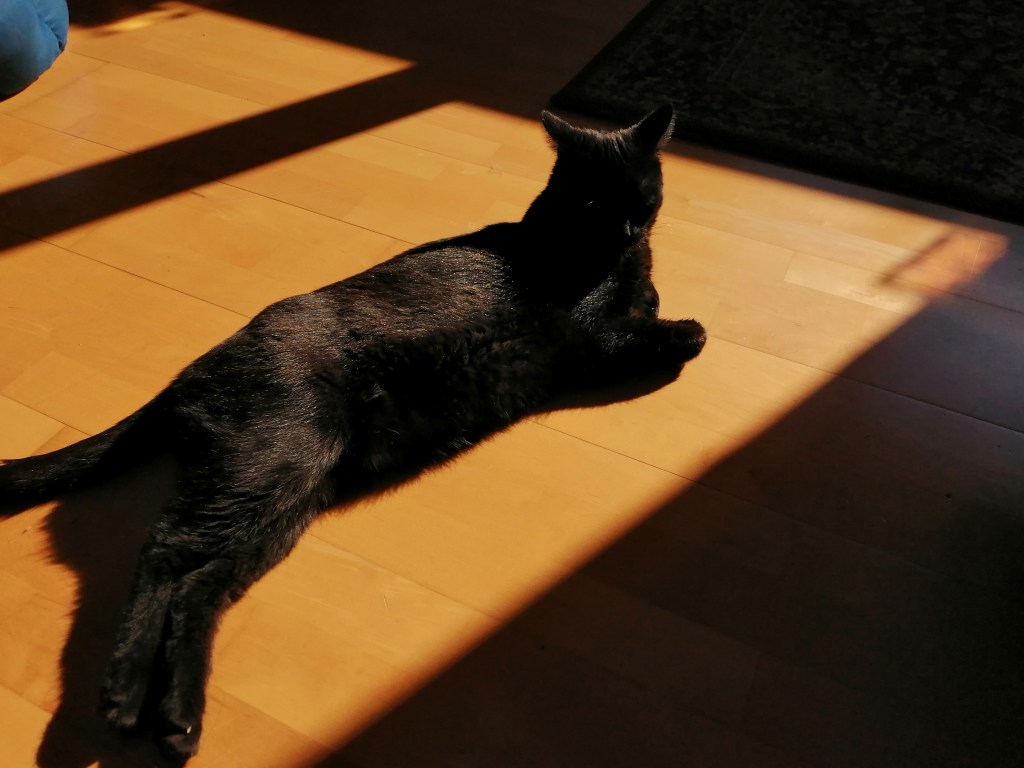
I’ve nearly always had a cat, or cats: a succession of Sandys, Freddys, Moixitos, Tommys, Bettys and Friedas, ranging from ginger, chocolate point Siamese, short and long-haired tabbies and panther black.
The first childhood cat, a long-haired ginger, inevitably called Sandy and tormented by me pushing him around in my dolls pram wearing dolls clothes, was really my mother’s and the second, a beautiful siamese called Moixitos, was bought by me at a pet shop. The others just appeared in my life, either because they were dumped over my wall as kittens or because they turned up as adults, plonked themselves on the sofa and announced they were staying. What could I do? At the moment I have 3 two-year-old cats. One was adopted and the others were thrown over the wall at two months. Someone knew there was a sucker who would take them in.
Before I go on to the praising, I’ll start by enumerating the few drawbacks of these feline beauties to stave off the cat haters getting in there first:
1 The sofa and the carpet are their favourite scratching posts even if you have available trees outside. 2 If you don’t brush them regularly, balls of their shedded fur roll around the floor in moulting time and stick to your dark clothes. 3 If you have more than one, they like to have regular fights as part of their games. 4 They wake you at 7am or before to be fed, each in their different way. Some sit on your chest/head and pat your face with increasing intensity. Others leap on and off the bed meowing loudly. Some knock as many objects as they can off the bedside table to get your attention. I’ve suffered it all. 5 They are hunters, so they kill birds (their worst defect, for me), mice, lizards, grasshoppers, crickets, all types of crawling insects and bring their trophies to your mat.
So why the fascination for cats? First of all, their beauty. I love watching these sleek, elegant, graceful, silky and totally non-human creatures. I say this, because dogs can have almost human qualities. They are faithful servants to their masters, understand most human language and show emotions. Not that I don’t like dogs. I do, but they never seem to show up in my life the way cats do. Cats just about understand their name and ‘no’, but it’s probably more the tone of the voice than the actual word. So I never expect a ‘human’ reaction from them. They are purely feline and mysterious. You can’t be their master; they choose to be with you. That is the second reason why I love them : their apparent free will and independence. They probably see us as another huge, clumsy, hairless cat who feeds and licks them with our massive paws. And thirdly: they make me feel good. Even when I’m tired, stressed, annoyed, worried or sad, they always make me smile and forget myself for a while. Cats are therapeutic.
Some say they have supernatural powers and ‘see’ spirits. It’s true that they often sit like statues staring wide-eyed at something behind me and then follow whatever it is with scared eyes. It really gives me the creeps. And then they seem to ‘read’ me. They know when I’m coming home, know the sound of my car and suddenly appear at the gate to welcome me. They definitely study me and my reactions. They disappear two minutes before I give them a defleaing/deworming pill. How do they know? When I’m ill they curl up at my side, as if they were trying to heal me. They are also incredibly curious about everything I do. They follow me everywhere and don’t like it when I leave the house. When I am away on holiday, their substitute carers say they look quite depressed, so in their feline way they do miss me.
They love to play and they love to sleep. They are total zen. They give you space (apart from when it’s cold and they fight for your lap), they wash themselves and they cover up their poo. They don’t make a mess when they eat and are very choosey about cat food brands. All you have to do is admire their beauty and feed them. The perfect companions.
Of course when they die it’s a tragedy, as with any pet. Here is a poem I wrote some years back when my Siamese cat died. It’s taken from my book of poems: Poems of Joy and Melancholy.
MOIX
Such an emaciated old cat But I loved you for all that. How your absence hurts, You not coming to greet me Still with sinuous elegance, Still leaping to my lap To draw my warmth To your poor decaying body. A scrap of a cat you’d become, Little left of your magnificence. But love loves the essence Though excellence is gone. And you could still push out a purr With a stroke on your bony back.
What sphinx now will stretch On its thread pulled throne? What blue-eyed seer will Stare at invisible delights Beyond the realm of sofa? What fragile speck of life Will lift its sculpted head Once silken brown Then dull and stuck with age But still a soothing gift For weary hands And broken hearts To greet me on my return From vicious motorways That plunder fields And feed on skeletons Of sacrificial animals?
Can claw and fur And wild enigmatic eye, Insignificant and precious, Root deep in a human heart And rest there forever?
Heather Smith
Published work.
-
Time to Decipher Trees
-
Roots? 21st July
-
Summertime
-
Julie, Patricia

